There is a hidden enemy that standard magnets completely ignore: aluminum.
Post-consumer bottles are covered in aluminum twist-off caps (from wine and liquor bottles), thin foil seals on juice containers, and tiny brass springs inside soap dispensers. Because aluminum and brass are non-magnetic, they slide right under the magnet and enter the cutting room.
Without effective aluminum separation in PET recycling, these metal pieces travel straight into your extruder, scratching expensive screws and causing tens of thousands of dollars in breakdown repairs.
The Common Mistake: “Won’t the Water Tank Catch the Aluminum?”
Many beginners ask: “Can’t my water floating tank separate aluminum?”
The short answer is: No, it can’t.
Water separation works purely on density:
- Bottle caps (PP/PE) are lighter than water, so they float to the top and get scooped away.
- PET flakes are heavier than water, so they sink straight to the bottom.
- Aluminum is also much heavier than water, so it sinks right alongside the PET flakes!
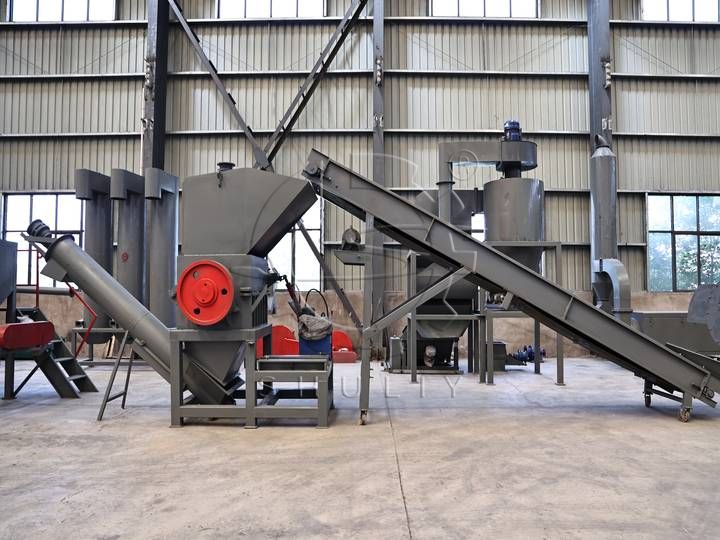
In a standard complete PET bottle washing line , the screw auger at the bottom of the tank scoops up the PET flakes and the aluminum together, dumping both directly into the hot washer .
When this mixed plastic enters the extruder at 280°C, the PET plastic turns into liquid melt, but the aluminum stays solid (aluminum doesn’t melt until 660°C). As the screw spins, it drags these hard metal chunks against the barrel wall like nails on a blackboard. The result? A deeply scratched barrel, leaking plastic, ruined filter screens, and an emergency shutdown of your rPET pelletizing line.
The Working Solution: How We Kick Aluminum Out Using “Eddy Currents”
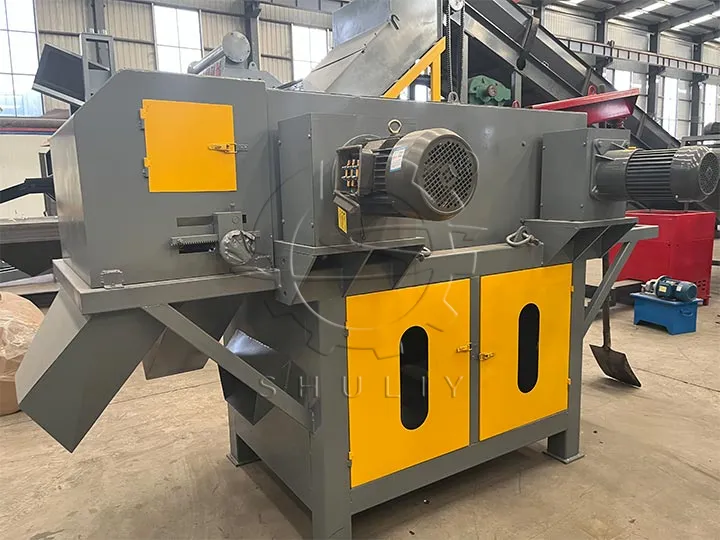
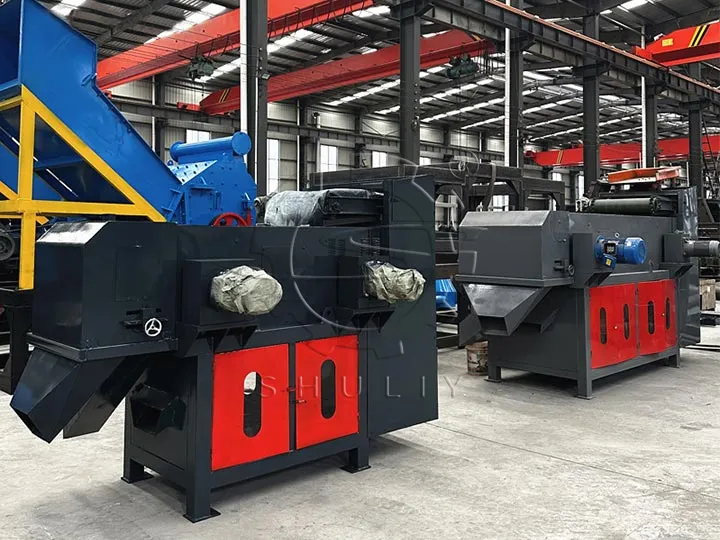
Since magnets cannot pull aluminum, Shuliy Machinery uses a smart machine called an eddy current separator for plastic.
Instead of pulling metal like a magnet, this machine shoots aluminum forward like a catapult.
Here is how it works in simple language:
- The Fast Rotor: Inside the conveyor roller, there is a separate rotor spinning with powerful magnets at over 3,000 RPM.
- The “Electric Jump”: When a piece of aluminum moves over this spinning roller, the alternating magnetic forces generate tiny electrical currents inside the metal.
- The Repulsion Effect: This electrical charge turns the aluminum flake into a temporary magnet with the opposite polarity. The two magnets fight each other, and the aluminum is instantly kicked forward over a splitter wall!
- The PET Flakes Drop: Because plastic is non-conductive, the PET flakes simply fall down under gravity into the clean bag.
Where Does It Fit in Your Factory?
Timing is everything. You cannot separate aluminum when the plastic is still wet, because water makes the flakes stick together.
Shuliy’s engineered layout places metal removal in three logical checkpoints:
- Before the Crusher (Whole Bottles): A heavy overhead magnet picks up baling wire and steel scraps, protecting the knives of your heavy-duty PET crusher .
- After the Dryer (Dry Flakes): Once the flakes pass through our horizontal dryer and hot air pipe, the dry, loose material passes over the Eddy Current Separator to bounce out aluminum caps, foil, and copper bits.
- Before the Silo (Final Check): Right before packing or feeding the extruder, an ultra-sensitive digital metal sensor inspects the stream. If a 0.5mm tiny metal particle is still hidden inside, a high-speed air blast puffs it out automatically.